Summary
Most visual programming tools fail at scale because they treat the UI as the source of truth. To build a professional-grade framework, the visual layer must be a secondary concern. The primary concern is the State Engine.
Beyond the UI: Engineering a Professional-Grade State Engine for DAG Studio
Over the last ten days, I have focused on establishing the “Industrial Foundation” of DAG Studio. Rather than building features, I’ve been building the laws that govern the system.
The Architectural Milestones:
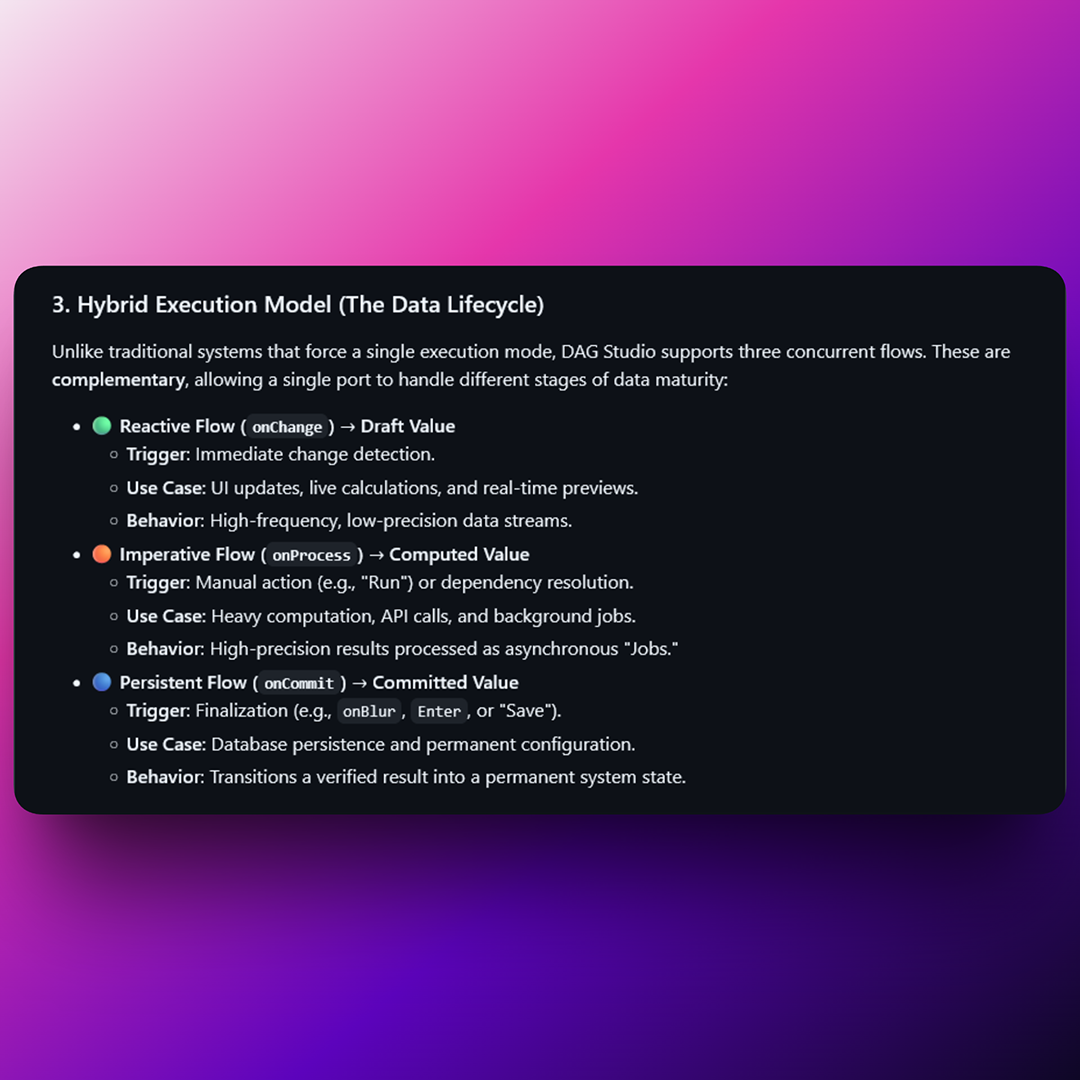
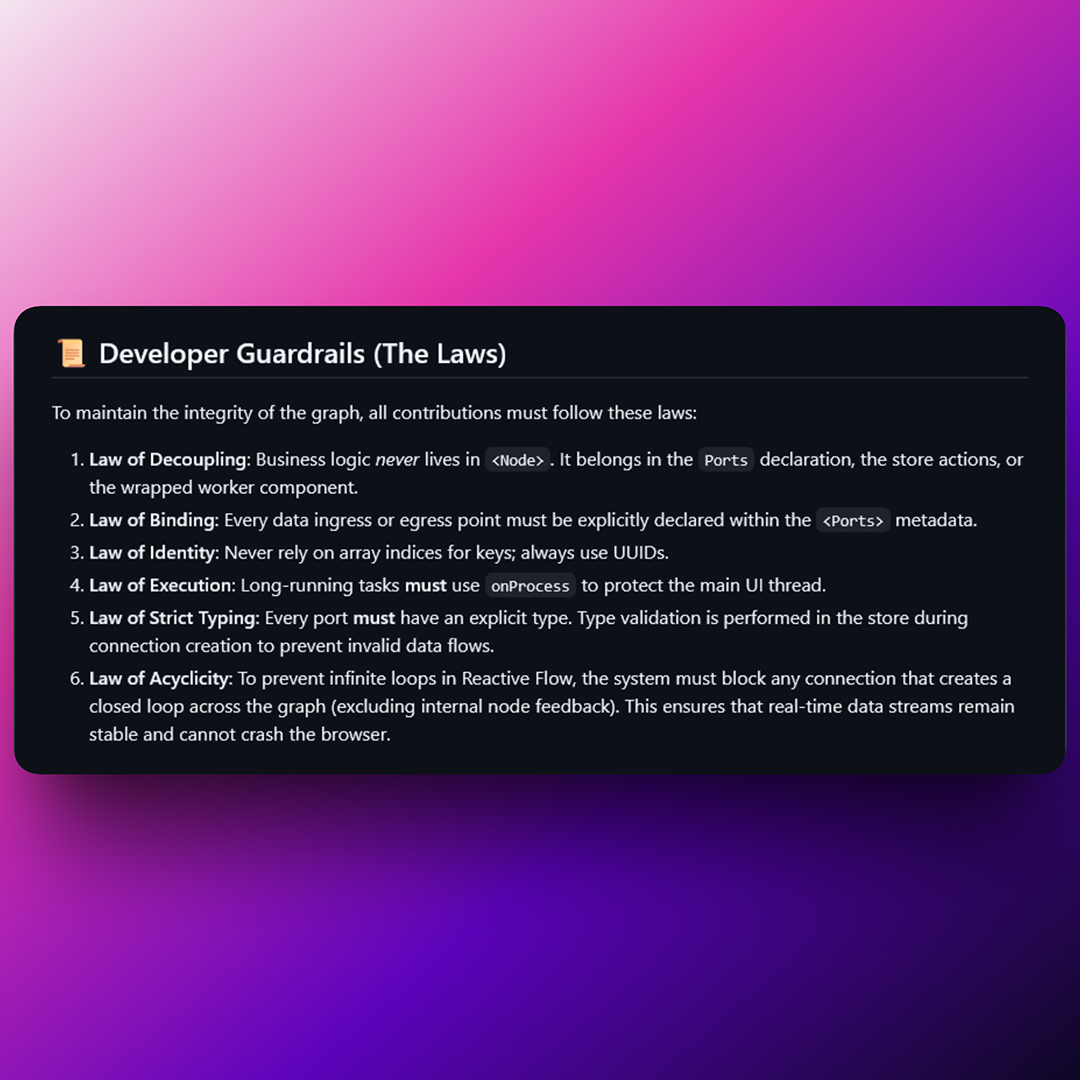
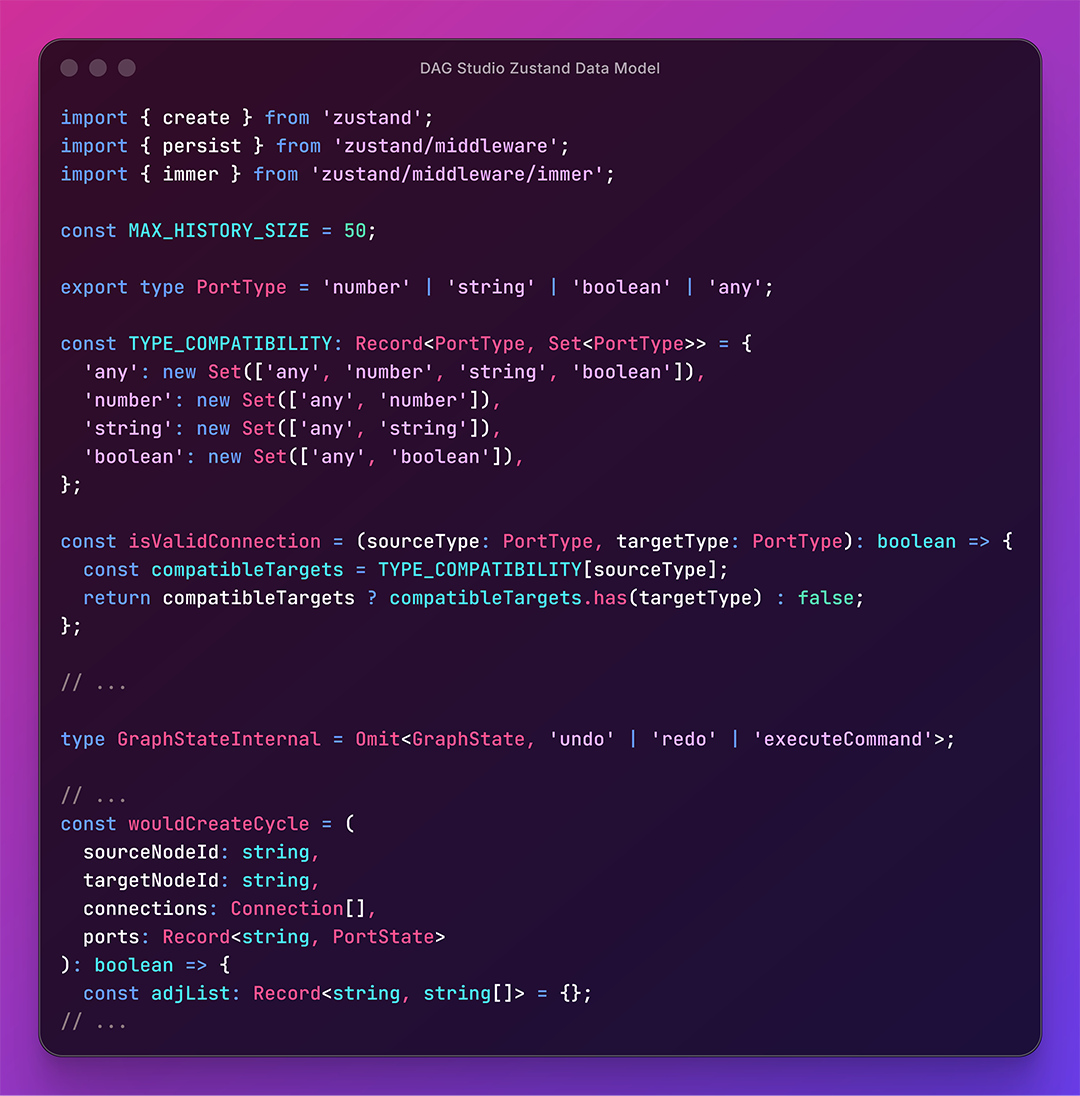
- Structural Acyclicity: I’ve implemented guards to mathematically prevent infinite loops in reactive flows. This ensures that no matter how complex the graph becomes, the system remains stable and predictable.
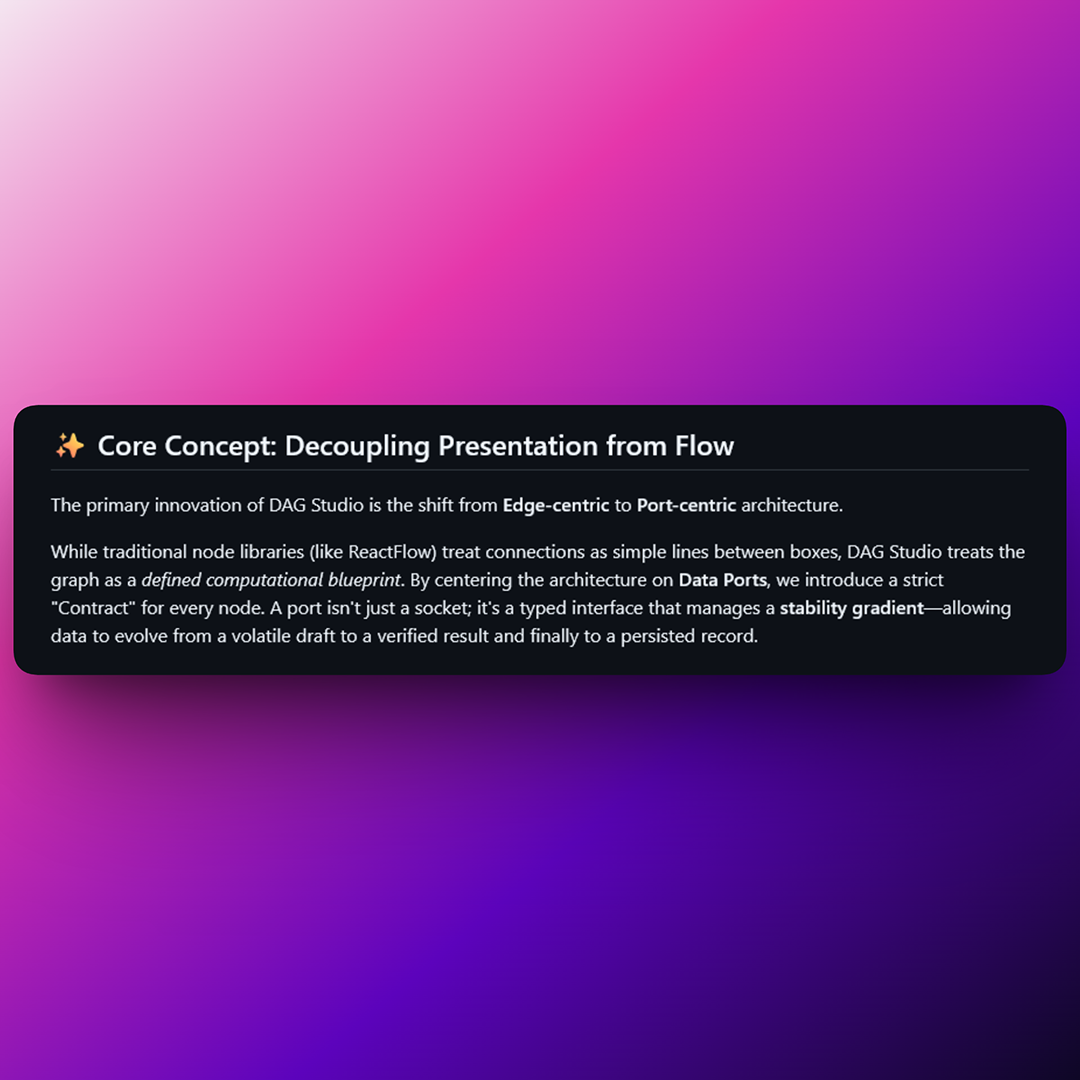
- Decoupled State Orchestration: Utilizing Zustand and Immer, I’ve separated the visual representation from the data flow logic. The UI is now a “dumb” shell; the intelligence resides in a centralized engine.
- Strict Type Enforcement: To eliminate runtime errors in complex pipelines, I’ve implemented a strict type-safety layer. Data entering a port is validated against the node’s requirements before execution.
The Vision: The goal is to bridge the gap between the flexibility of visual graphs and the reliability of compiled programs. DAG Studio isn’t just a tool for sketching ideas—it’s a framework for building production-ready data transformations.
Join the Development: The POC is now live on GitHub. I am currently seeking both technical collaborators and corporate sponsors to accelerate the roadmap from POC to a full-scale professional framework.
The Meta
- Put together this post